
As the most adaptable and efficient core equipment in current organic fertilizer production, the organic fertilizer crawler compost turning machine breaks through the site limitations of traditional turning equipment with the unique advantage of crawler walking, realizing the standardization and high efficiency of aerobic fermentation of organic materials. It not only solves the pollution problem of livestock manure, agricultural straw and other waste, but also builds a circular chain of “waste organic fertilizer green planting”, injecting strong impetus into sustainable agricultural development.
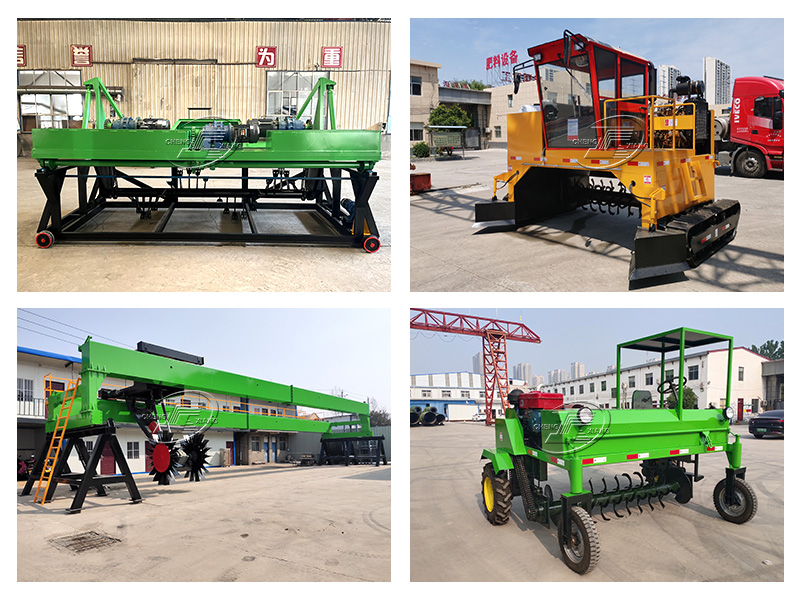
Zhengzhou Chengxiang Heavy Industry, as a professional fertilizer equipment supplier, specializes in supplying organic fertilizer production lines to our customers. Our factory mainly offers the following types of compost turners: large wheel disc compost turning machine, crawler compost turning machine, four-wheel compost turning machine, and groove compost turning machine. This article mainly introduces the application of Zhengzhou Chengxiang Heavy Industry’s crawler compost turning machine in organic fertilizer fermentation turning.
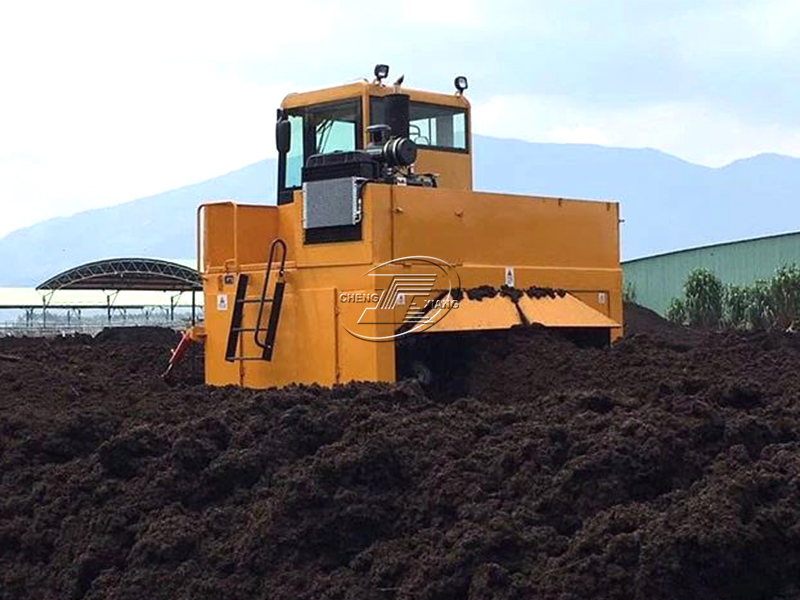
Organic fertilizer crawler turning machine fermentation turning stage
1.The first stage is the raw material pretreatment stage.
Mix organic raw materials such as animal manure and straw in proportion, adjust the moisture content to 55% -65% (hold them in a ball and scatter them when they fall to the ground, which is the optimal humidity for aerobic microbial growth), and add an appropriate amount of fermentation bacteria (Bacillus subtilis, lactic acid bacteria, etc.). After mixing evenly by manual or mixing equipment, stack them into long strips. The specifications of the strips can be flexibly adjusted according to the equipment model and production scale, generally with a width of 2-4 meters and a height of 1-1.8 meters, laying the foundation for subsequent flipping and fermentation.
2.The second stage is the flipping and fermentation stage.
Start the crawler compost turning machine, and the operator adjusts the flipping depth and walking speed through the fully hydraulic control system, driving at a constant speed along the stack. The rotating blade shaft or spiral blade at the bottom of the equipment grabs, disperses, and mixes materials, synchronously completing the operation of crushing large blocks of materials, allowing the materials to be fully mixed with bacterial strains and air. During this process, aerobic microorganisms rapidly proliferate, and the material temperature rapidly rises to 55-70 ℃, lasting for 3-5 days to achieve deodorization and sterilization effects, completely killing harmful substances such as insect eggs, bacteria, weed seeds, etc. in feces, and avoiding the problem of burning seedlings caused by incomplete decomposition. It is worth noting that some high-end models can be equipped with automatic bacterial spraying and spraying devices to further improve fermentation efficiency and material uniformity.
3.The third stage is the maturation and conditioning stage.
As the fermentation process progresses, the temperature of the material gradually decreases. At this time, it is necessary to adjust the flipping frequency from once a day to once every 2-3 days, reduce the flipping depth appropriately, and focus on adjusting the temperature and humidity of the material to avoid harmful odor gases such as hydrogen sulfide and amine gas produced by local anaerobic fermentation. Through continuous flipping operations, ensure that the materials are evenly decomposed into humus, allowing organic materials to be fully decomposed into humus, ultimately forming a deep brown, odorless, and nutritionally balanced decomposed material, preparing for subsequent crushing, packaging, and other processes.
The power system of the equipment provides strong support for the flipping device and track walking, and the fully hydraulic operating system realizes flexible control of the lifting and walking direction adjustment of the flipping drum. The operation is simple and easy to understand, and one person can complete the entire process, greatly reducing manual labor intensity. At the same time, the tracked chassis design has low grounding pressure, which can effectively avoid slipping and sinking on wet and soft ground, ensuring the continuity of operation.
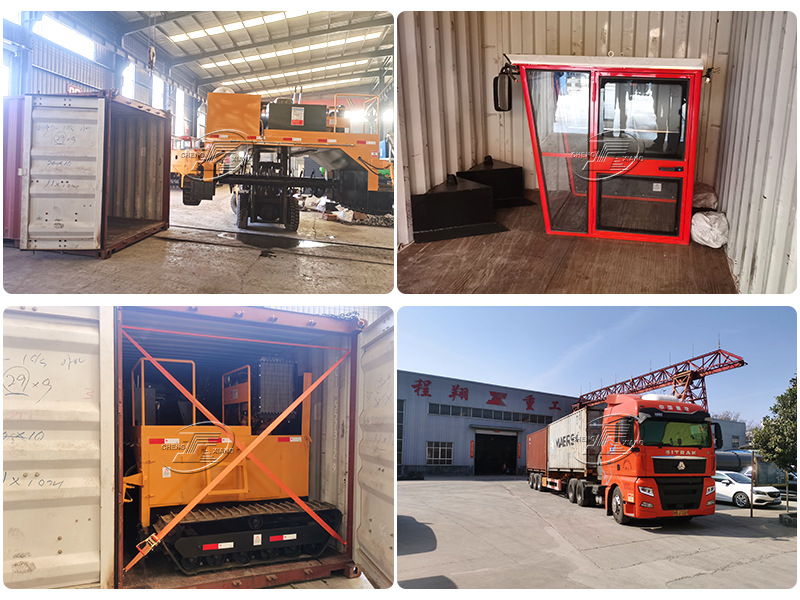
Advantages and highlights of Chengxiang crawler compost turning machine
1.One is the tracked chassis design
which has outstanding all terrain adaptability. Adopting high wear-resistant rubber tracks or steel tracks, with a large grounding area and low grounding pressure, it can freely travel on soft, muddy, and uneven fermentation sites without the need for hardened ground or track laying. It can operate in outdoor areas and move flexibly in workshop greenhouses. At the same time, the small radius steering technology combined with the hydraulic power balance device enables the equipment to flexibly turn even in narrow and irregular areas, avoiding blind spots during operation and solving the industry pain points of traditional wheeled turning machines that are prone to slipping and sinking in wet and soft fields, greatly improving operational flexibility and stability.
2.The second is the hydraulic control system
which is easy to operate and stable. Adopting a hydraulic drive mode and a pull rod steering wheel operation, the flipping drum can be adjusted for lifting and lowering through a hydraulic system. The operator can complete all actions such as flipping, speed regulation, steering, and lifting while sitting in the cockpit, without the need to get off the vehicle for operation. The operation difficulty is low, and ordinary workers can go on duty after simple training. The flipping clutch adopts a soft start design, which can effectively reduce wear on the chain, bearings, and blade shaft compared to traditional hard clutches, and extend the service life of the equipment; Simultaneously installing a front hydraulic push plate eliminates the need for manual labor and time-consuming stacking, further improving operational efficiency and reducing labor costs.
3.The third is the integration of flipping
throwing, and crushing, which greatly improves fermentation efficiency. The flipping device is equipped with a customized rotating blade shaft and rake teeth, forged with special alloy, which is wear-resistant and corrosion-resistant. It can synchronously complete the mixing and crushing of materials during the flipping process, effectively breaking down material clumps, crushing and refining large materials such as livestock manure and straw, and fully mixing the materials with bacterial strains and air, greatly improving the efficiency of aerobic fermentation.
4.Fourthly, it has strong power and energy efficiency, and is suitable for handling diverse materials
Sufficient power and low fuel consumption, compared to traditional tipping equipment, the average energy consumption is reduced by 18% -20%. The power distribution is reasonable, and the hydraulic pump and walking motor are driven by the power distribution box to achieve efficient energy utilization. It can efficiently process high humidity, high viscosity livestock manure, sludge and other materials, avoid slipping and sinking, and ensure the continuity of operation.
5.The fifth is environmentally compliant design, balancing safety and comfort
By mandatory flipping operations, ensure that materials are fully exposed to air, avoid local anaerobic fermentation, and reduce harmful odor gas emissions; The core components of the equipment are made of wear-resistant and corrosion-resistant materials, suitable for the corrosive environment of organic fertilizer fermentation materials, with low failure rate and long service life; The driver’s cabin can be equipped with air conditioning according to demand, and is equipped with comprehensive safety protection devices (overload protection, emergency stop button, etc.).
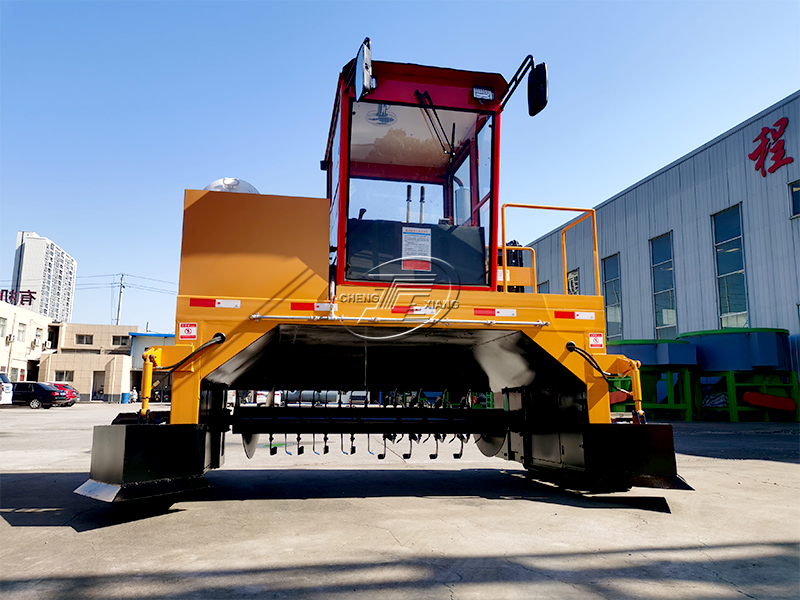
Precautions for operating crawler compost turning machine
1.One is to conduct a comprehensive inspection before homework
Before starting work, it is necessary to conduct a comprehensive inspection of the equipment, including whether the oil levels of engine oil, hydraulic oil, and diesel are sufficient, whether the oil quality is normal, and avoid using inferior oil; Check if the track tightness is appropriate. If the track is too loose, adjust the tensioning device in a timely manner to avoid slipping. If it is too tight, loosen it appropriately to reduce equipment load; Check whether the flipping blade shaft and rake teeth are intact, whether there is looseness, damage, or deformation, and whether the connecting bolts are tightened; Check whether the operating system is normal, whether there is any leakage in the hydraulic system, and whether the safety protection devices (overload protection, emergency stop button, protective baffle, etc.) are complete and effective; At the same time, inspect the work site, remove stones, steel bars, plastic film and other debris from the site, avoid damaging the flipping knife shaft and tracks with debris, ensure that the work site is flat and free of obvious obstacles. If the site is too muddy, gravel and wooden boards can be laid to increase friction.
2.The second is to standardize the operating procedures
Operators need to undergo professional training, be familiar with the operation methods and precautions of the equipment, strictly follow the operating procedures, and strictly prohibit illegal operations. When starting the equipment, the power system needs to be started first. After the equipment is running normally, the flipping device and walking system can be started. Before starting, sound the horn to warn and confirm that there is no one around; During the homework process, it is necessary to drive at a constant speed to avoid sudden acceleration or braking. The flipping depth and walking speed should be flexibly adjusted according to the thickness of the material and the fermentation stage to avoid overloading the equipment due to flipping too deeply or affecting the flipping effect due to flipping too shallow; It is strictly prohibited to get off the vehicle for inspection and maintenance during the operation of the equipment, and it is strictly prohibited to touch the rotating blade shaft and rake teeth with hands to avoid safety accidents; Operators must wear protective equipment, stick to their posts, and not leave their posts without authorization.
3.The third is real-time observation of the homework process
During the homework process, it is necessary to closely observe the operation of the equipment, including engine sound, hydraulic system pressure, track running status, etc. If abnormal sound, oil leakage, track slippage, tool shaft jamming and other problems are found, the machine should be stopped immediately for inspection and troubleshooting before continuing the work. It is strictly prohibited to operate the equipment with faults. At the same time, observe the material flipping effect. If uneven flipping and severe clumping are found, adjust the flipping depth and walking speed to ensure that the flipping effect meets the fermentation requirements; Observe the temperature changes of the materials and record the stack temperature daily.
4.standardize the handling of homework
After completing the homework, it is necessary to first turn off the flipping device, then turn off the walking system, and finally turn off the power system; Clean up the material residue on the equipment, especially the debris in the gaps between the flipping blade shaft, rake teeth, and tracks, to avoid material clumping and affecting the next operation. Use a high-pressure water gun to rinse the surface of the equipment to ensure cleanliness; Check the core components of the equipment, and if there is wear or looseness, tighten and replace them in a timely manner; Park the equipment in a flat and dry area, take measures to prevent rain, dust, and sun exposure, and avoid moisture, rust, and aging of the equipment; If the working environment temperature is low, it is necessary to drain the hydraulic oil and water tank to prevent damage to the pipeline caused by low-temperature freezing.
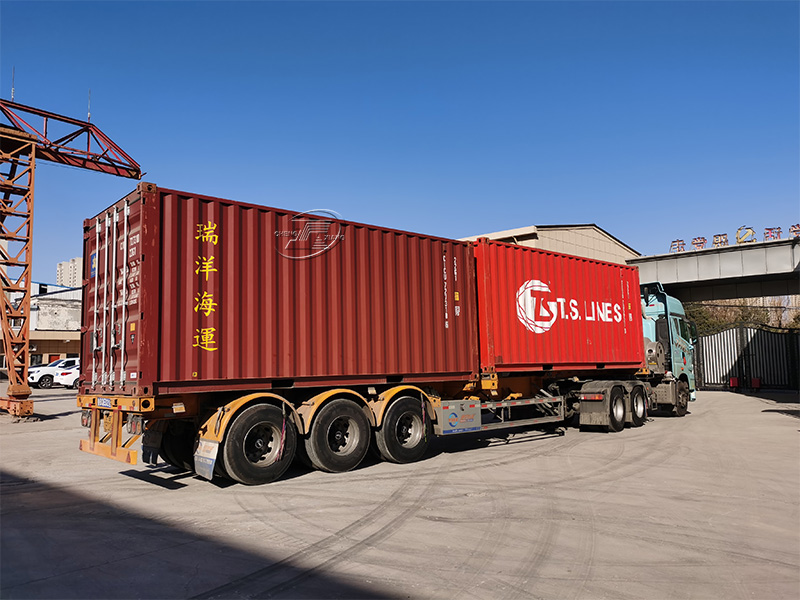
The application prospects of crawler compost turning machine
From the perspective of application scenarios, large and medium-sized organic fertilizer factories, large-scale breeding farms, and agricultural waste treatment centers are the main demand groups for tracked turners. With the large-scale development of these entities, the demand for tracked turners will continue to increase; At the same time, with the popularization of the concept of green agriculture, the demand for organic fertilizers in small family farms and planting cooperatives is constantly increasing. The market demand for small crawler stackers will gradually expand, and the market coverage will be further expanded. In addition, the application areas of track turning machines will continue to expand. In addition to traditional organic fertilizer production, they will also be applied in fields such as sludge treatment, kitchen waste treatment, and garden waste treatment, further enhancing the market demand and application value of the equipment.
As the core equipment for organic fertilizer production, the organic fertilizer track turning machine, with its strong adaptability, convenient operation, outstanding efficiency, environmental compliance and other advantages, has solved the problem of organic waste pollution, promoted the resource utilization of agricultural waste, and built a circular chain of “waste organic fertilizer green planting”, providing strong support for the development of green agriculture and ecological agriculture. From the large-scale production of organic fertilizer plants, to the resource utilization of manure in large-scale breeding farms, and to the self-sufficiency of organic fertilizer in small family farms, crawler turntables have demonstrated significant practical value in different scenarios, helping relevant entities achieve development goals of improving quality and efficiency, energy conservation and environmental protection, and resource recycling.
Zhengzhou Chengxiang Heavy Industry – Professional Fertilizer Equipment Manufacturer
Zhengzhou Chengxiang Heavy Industry is a well-known supplier of disc granulators and other fertilizer equipment in China. We are committed to producing professional, high-quality, and efficient fertilizer equipment. We utilize advanced technology and design to manufacture fertilizer granulators and fertilizer production lines, and can add other equipment or provide customized designs to meet your needs. At Zhengzhou Chengxiang Heavy Industry, you are sure to find your ideal fertilizer equipment. Furthermore, if you encounter any problems or have any needs during production using our fertilizer equipment, we provide 24-hour assistance.
Zhengzhou Chengxiang Heavy Industry mainly supplies: organic fertilizer production lines, compound fertilizer production lines, BB fertilizer production lines and supporting equipment. We design and provide a complete production line for you. Please rest assured that as a fertilizer equipment manufacturer with 30 years of export experience, we have the ability and confidence to satisfy you with our products. Welcome to visit our factory and purchase equipment.


